

Wonder
The important thing is not to stop questioning. Curiosity has its own reason for existing... It is enough if one tries merely to comprehend a little of this mystery every day. - Albert Einstein

You heard about the WanderRx big picture in my last post. As a reminder, think about it as an integration of science-based ways of showing up in your days that allows personal flourishing to unfold. While we’ll talk about many health, wellness, longevity, and happiness concepts, we will discourage excess striving, perfection, or an unreasonable, unsustainable lifestyle. We will also call foul when we hear conflicting information and instead ground ourselves in first principles.
It’s time to dive into the deep end. I’m going to unpack each component in the coming posts. I’ll also provide some Rx suggestions for what you might do with all this. (So be sure to scroll all the way down!)
Fair warning: I’ll be mixing ancient wisdom with modern science because it turns out that some ancient wisdom has turned out to have been right all along even though it wasn’t known why until more recently. We don’t always even know the why behind Western medicine either. And true to the whole “wandering” thing, don’t expect me to go in order. I may also have to sprinkle some stories in. After all, life isn’t orderly and is packed with stories, right?
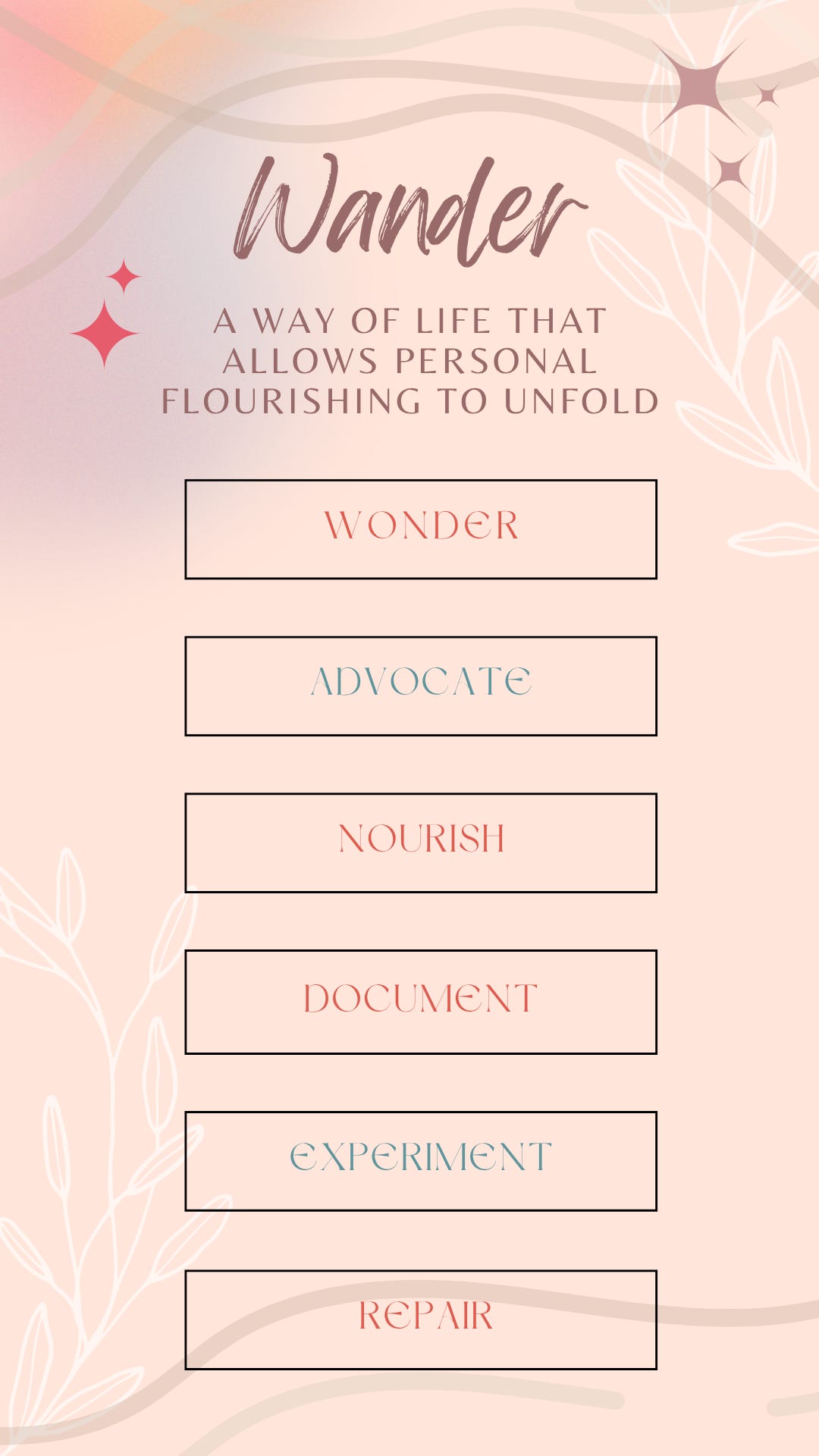
Let’s start with Wonder.
Picture yourself holding a prism—one that lets you peer into Wonder’s deeper currents. Through it, you’ll glimpse five interconnected concepts. Let me break them down.
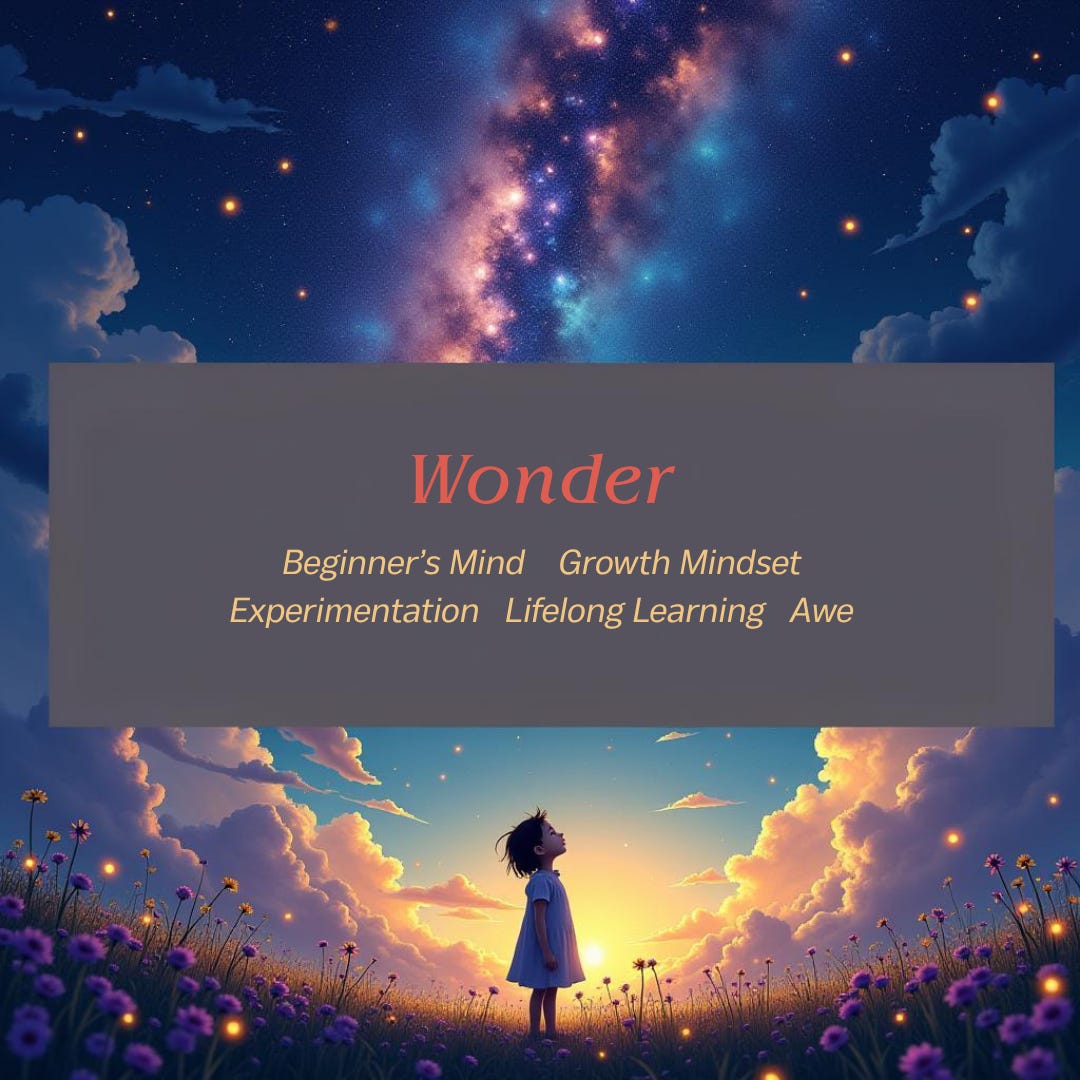
Beginner’s Mind unlocks Wonder’s power. Japanese Zen teacher Shunryu Suzuki stated: “In the beginner’s mind there are many possibilities, but in the expert’s mind there are few.”
It’s about time we acknowledged that expertise has a dark side. Experts can become trapped by their knowledge—their minds calcified by assumptions and past experiences. In fact, healthcare is riddled with this problem. (Check out Jerome Groopman’s How Doctors Think for a story on that topic as told by a doctor himself. Though honestly? I’d rename it How People Think. We doctors are annoyingly human.)
The wisest experts freely admit: the more they learn, the more they realize they’re standing at the edge of an ocean of ignorance. Beginners see with fresh eyes, unburdened by cognitive baggage. Does this mean you should ignore your doctor’s advice? Hell no. The guidance here is that we should all hold our own expertise lightly. Pay attention to how you think (metacognition), not just what you think.
Growth mindset—psychologist Carol Dweck’s gift to humanity—comes in two flavors:
Fixed mindset: Talents are innate. You’ve either got it, or you don’t.
Growth mindset: Abilities are cultivated. You can grow them like tomatoes. (Anyone want some cherry tomatoes? If my husband brings another bucketful into the house, I will have no remaining counter space.)
Your mindset determines how you handle life’s curveballs. Fixed mindset people dodge challenges and crumble at setbacks because failure feels like a verdict on their worth. Growth mindset folks? They treat failure as data. They lean into hard things. They persist.
This reminds me of something I learned about health behavior change years ago: success begets success. Hit one goal, and you’re more likely to nail the next because you develop self-efficacy. But watch out for what Dweck calls “false growth mindset”—just gritting your teeth and trying harder without actual strategies, support, or realistic obstacle planning.
Which brings us to experimentation (hey, the “E” in WANDER!). Dweck sees experimentation as growth mindset’s engine—it’s how you discover what works. More importantly, it’s what lets you bounce back when something crashes and burns.
These concepts stack like building blocks for lifelong learners. Beginner’s mind, growth mindset, and experimentation create the foundation for continuous learning—which is essential for keeping your brain sharp. Neuroplasticity research confirms your brain keeps forming new connections throughout life. Sure, it slows down a bit, but learning novel, challenging things keeps those neural pathways firing. The research also shows continuous learners report higher life satisfaction, stronger sense of purpose, and lower depression rates. Plus, depending on what you’re learning (salsa dancing, pottery), you might build social connections—which is HUGE for your healthspan. Younger folks enjoy better wage growth and career progression too.
Here’s a great resource on what lifelong learning does for cognitive health as we age.
Here’s an example what a person with a growth mindset does when faced with a health challenge:
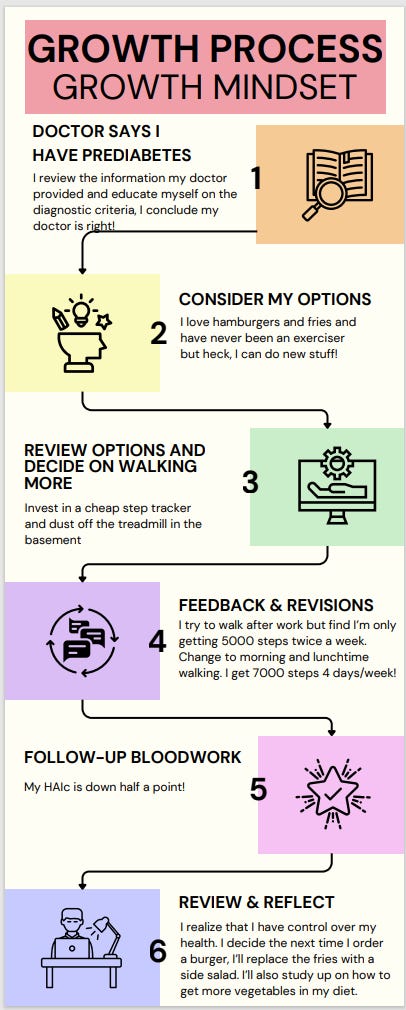
On the other hand, the person with a fixed mindset tosses their doctor’s pamphlet in the trash muttering, “Yeah, my dad was never able to get his diabetes under control. Can’t teach an old dog new tricks.” Yes, this is a simple example. Happens every single day? Also, yes.
Speaking of aging: I’m turning 63 next month. Think I had to learn a few new things to start this newsletter? The frustration and time consumption triggered my impatience on an endless loop. But I researched, called friends for help, and pushed through. There’s real satisfaction in gaining new skills when you persist past the suck. Can I always do this? Absolutely not. But it’s a good reminder that I should try more often.
The one remaining facet in the prism is Awe. Awe is so incredible, it deserves its own post so stay tuned and get ready to have your mind blown.

Dr. Carrie’s Rx
Try these practices to develop your Beginner’s Mind.
Take this Growth Mindset quiz with your friends and family then challenge one another!
Turn the TV off and read a book. Here’s where to find good one.
Let me know how it goes!